Ember Harbor: A tactical seaport puzzle for short strategic sessions
Ember Harbor, from TopTake, turns terminal logistics into an arcade puzzle where you command a fully automated seaport. The app centers on a Cargo Priority system that reorders warehouses to redirect an autonomous unloading grid in real time, challenging you to keep throughput high under pressure. Procedural port layouts, escalating shift hazards, and post-shift analytics are the main tools. Fans of strategic management puzzles who enjoy short, tense, fast-paced planning sessions on mobile find clear replay value here.
What kind of game is Ember Harbor?
Ember Harbor frames itself as an arcade-style logistics puzzle built around high-level command rather than vehicle control. The standout mechanic is a Cargo Priority system: reordering warehouses instantly reroutes an automated unloading grid as freighters and gantries react on their own. Play focuses on pattern recognition and timing, trading manual piloting for system-wide decisions that affect throughput across the whole terminal.
Does it have a multiplayer mode and how does it play?
The app is a terminal command experience, not a multiplayer or vehicle-simulation title; ships and cranes operate autonomously while you manage priorities. Each shift presents escalating pressures such as overcrowded depots and urgent delivery windows, so the core loop is: observe queues, reprioritize warehouses, and react to changing flow. Sessions emphasize quick decisions and short, mission-like shifts rather than long sandbox play.
What does the game look like on screen and how clear is the interface?
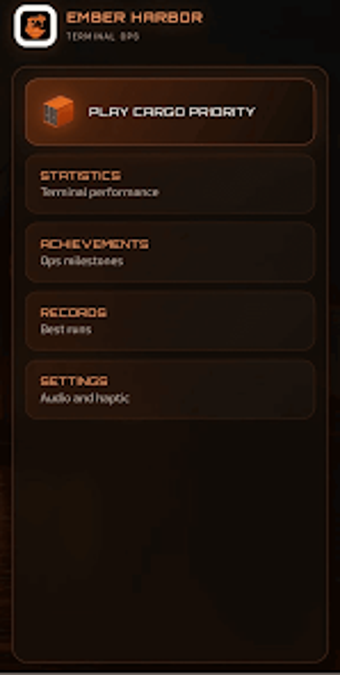
The presentation favors an industrial aesthetic and a high-contrast interface meant for clear visibility of complex logistics networks. The UI highlights container lanes and warehouse orderings so decisions remain legible under pressure. Post-shift analytics appear as detailed reports that break down efficiency, cleared containers, and personal records, giving players concrete metrics to pursue in subsequent runs.
How steep is the learning curve and why keep playing?
Learning centers on mastering priority chains rather than mastering controls, so the initial hurdle is conceptual rather than motor-driven. Replayability comes from procedural port generation that creates a new map layout on every run and from performance tracking that records best streaks and records. That combination rewards incremental improvement and short practice sessions aimed at refining decision patterns.
A compact, tactical pick for players who like pressured puzzles
Ember Harbor is a focused choice for players who enjoy time-pressured planning and measurable improvement on mobile Android devices. Expect short, intense shifts and a design that values system-level thinking over hands-on control. The game suits those who enjoy optimizing performance metrics and quick sessions, while players seeking direct vehicle operation should look elsewhere.